

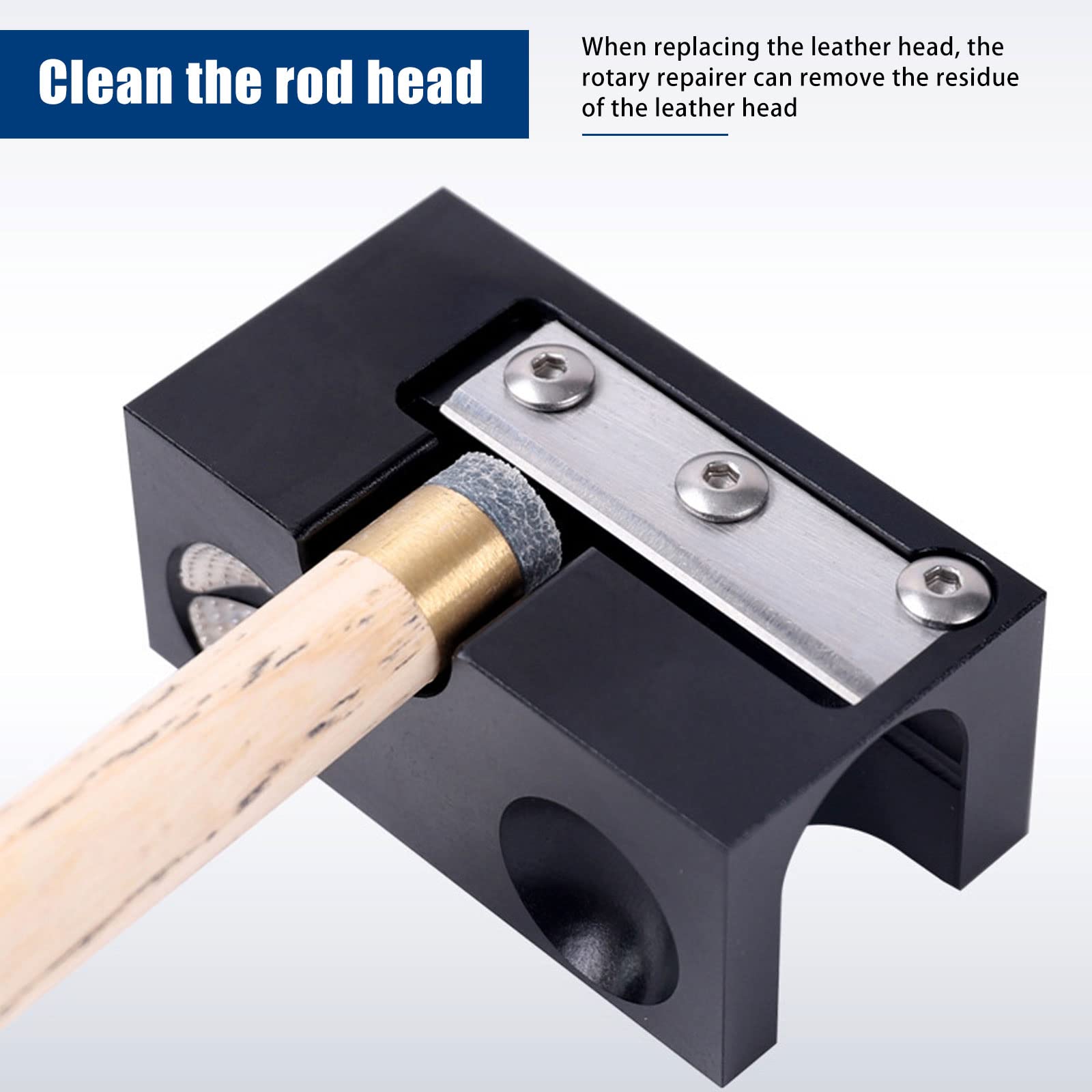
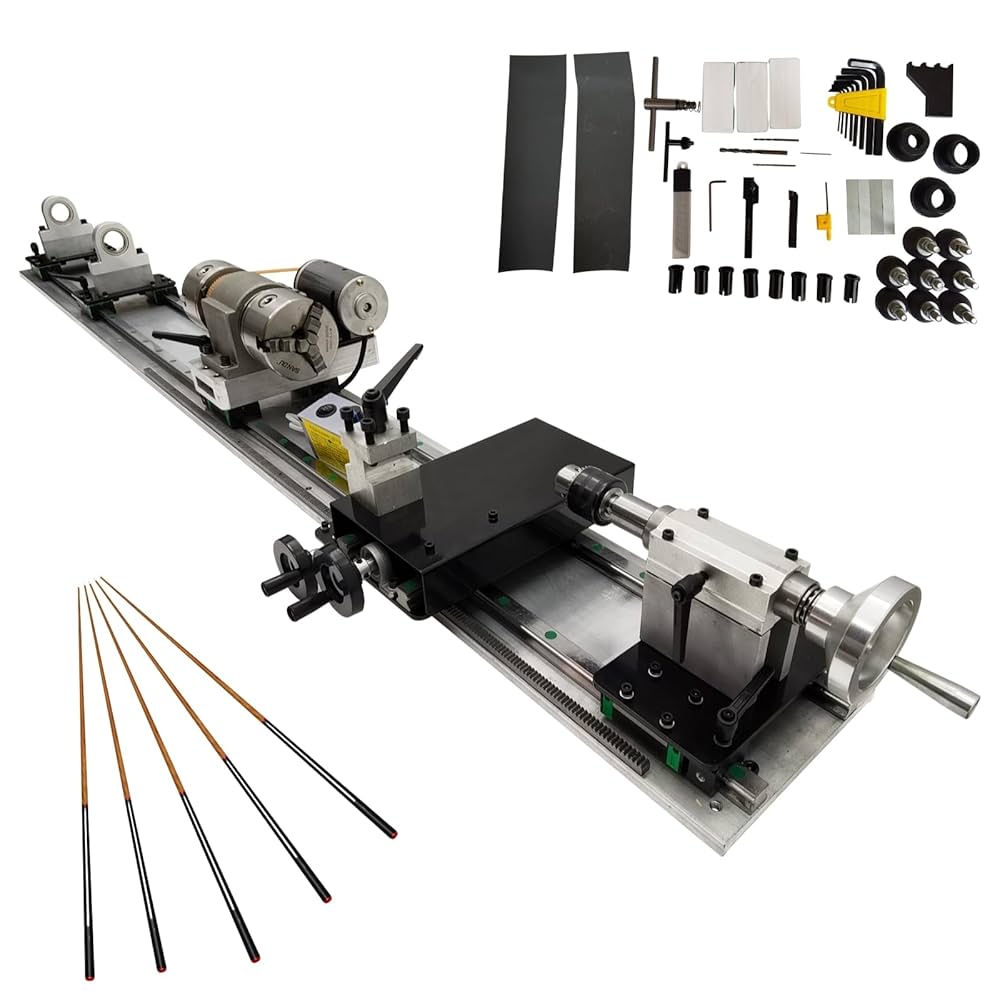
Send the product name to LUX98 for a fast quote and club setup advice in Phnom Penh.
Yes. LUX98 supports billiard table delivery, installation and setup consulting in Phnom Penh and other Cambodia locations by quote.
Yes. Contact LUX98 by phone, WhatsApp or Telegram to request price, warranty, delivery and installation details.
Dưới đây là phiên bản tiếng Anh chuyên nghiệp, đã loại bỏ toàn bộ thẻ contentReference và chuẩn hóa theo phong cách catalogue cao cấp của LUX98:
MACHINE REPAIR STICK
Professional Cue Repair Lathe for Tip Replacement, Ferrule Work, Shaft Polishing, Cue Restoration, and Precision Maintenance
MACHINE REPAIR STICK is a professional cue-repair machine designed to perform a wide range of maintenance, repair, and restoration procedures for Pool cues, Snooker cues, and Carom cues.
Equipped with an adjustable-speed motor, precision chuck system, and linear guide mechanism, the machine allows cue technicians to complete delicate repair work with greater accuracy, consistency, and efficiency.
It can be used for:
- Cue-tip replacement
- Ferrule replacement
- Ferrule facing
- Tenon adjustment
- Tip shaping
- Tip trimming
- Shaft cleaning
- Shaft polishing
- Cue-surface restoration
- Routine cue maintenance
The MACHINE REPAIR STICK is an ideal solution for billiard clubs, cue-repair shops, billiard-equipment dealers, cue workshops, training centers, and professional technicians seeking to improve service quality and reduce repair time.
Technical Specifications
| Item | Specification |
|---|---|
| Product Name | MACHINE REPAIR STICK |
| Product Type | Professional Cue Repair Lathe |
| Primary Application | Cue Repair, Maintenance, and Restoration |
| Motor | 400W Brushless Motor, Depending on Version |
| Rotating Speed | 0–2,000 RPM, Continuously Adjustable |
| Power Supply | 220V / 50Hz |
| Optional Voltage | Some Versions May Support 110V |
| Holding System | Precision Chuck and Guided Sliding Rail |
| Main Functions | Tip Replacement, Ferrule Replacement, Turning, Sanding, Polishing, and Shaft Cleaning |
| Cue Compatibility | Pool Cue, Snooker Cue, and Carom Cue |
| Recommended Users | Cue Technicians, Billiard Clubs, Repair Shops, Dealers, and Cue Workshops |
Key Technologies
Variable-Speed Brushless Motor
The MACHINE REPAIR STICK may be equipped with a 400W brushless motor, depending on the selected version.
The adjustable motor system provides:
- Smooth speed control
- Stable rotational performance
- Reduced mechanical vibration
- Improved working accuracy
- Lower maintenance requirements
- Efficient long-duration operation
The ability to adjust speed allows the technician to select an appropriate rotation rate for each repair procedure.
Lower speeds may be used for delicate finishing, while higher speeds may support cleaning, polishing, and controlled shaping.
Continuously Adjustable Speed
The supplied specification lists an operating range of:
0–2,000 RPM
Continuously adjustable speed helps technicians perform different operations with greater control.
Typical applications include:
| Operation | General Speed Requirement |
|---|---|
| Tip Alignment | Low Speed |
| Ferrule Facing | Low to Medium Speed |
| Tip Trimming | Low to Medium Speed |
| Tip Shaping | Medium Speed |
| Shaft Cleaning | Low to Medium Speed |
| Shaft Polishing | Medium Speed |
| Surface Finishing | Speed Selected According to Material |
The appropriate speed must be selected according to the cue material, tooling, technician experience, and repair procedure.
Brushless Motor Technology
A brushless motor may provide several advantages compared with a conventional brushed motor:
- Reduced brush wear
- Lower routine motor maintenance
- Stable speed control
- Quieter operation
- Lower vibration
- Efficient power delivery
- Longer potential service life
Exact motor performance depends on the selected machine version.
Precision Chuck System
The chuck system securely holds the cue component during rotation.
A properly adjusted chuck helps provide:
- Stable workpiece positioning
- Improved concentricity
- Accurate tip installation
- Controlled ferrule work
- Reduced movement during polishing
- More consistent finishing
Correct clamping pressure is essential.
Excessive pressure may damage a shaft, ferrule, joint, or decorative surface.
Concentric Cue Alignment
Concentric alignment means that the cue component rotates around its correct center line.
Accurate alignment is especially important when performing:
- Cue-tip installation
- Ferrule replacement
- Ferrule facing
- Tenon adjustment
- Shaft finishing
- Joint inspection
- Diameter correction
Poor alignment may result in uneven trimming, vibration, visible runout, or inconsistent cue performance.
Professional Linear Guide
The guided sliding rail provides controlled movement for tools and accessories.
Benefits include:
- Smooth horizontal movement
- Stable tool positioning
- Improved cutting control
- More accurate material removal
- Cleaner finished surfaces
- Reduced operator error
A properly maintained guide rail helps improve repeatability during professional repairs.
Multi-Function Repair System
The MACHINE REPAIR STICK combines several cue-maintenance functions in one device.
Depending on the installed accessories, the machine may support:
- Cue-tip removal
- Cue-tip installation
- Cue-tip trimming
- Cue-tip shaping
- Cue-tip burnishing
- Ferrule removal
- Ferrule installation
- Ferrule facing
- Tenon adjustment
- Shaft cleaning
- Shaft polishing
- Surface restoration
- Joint cleaning
- Butt polishing
- Routine cue inspection
Accessories and tooling may vary by version and package.
Cue-Tip Replacement
Cue-tip replacement is one of the most common cue-repair services.
The machine can help the technician:
- Secure the shaft safely.
- Remove the worn cue tip.
- Clean and face the ferrule.
- Prepare the replacement tip.
- Center the new tip.
- Trim excess material.
- Shape the playing surface.
- Burnish the sidewall.
- Inspect alignment.
- Complete the final finish.
Machine-assisted tip work can improve speed and consistency when performed by a trained technician.
Cue-Tip Trimming
Replacement cue tips are often supplied slightly larger than the ferrule.
The rotating system allows the technician to trim the tip until its sidewall matches the ferrule diameter.
Accurate trimming helps provide:
- Clean appearance
- Even sidewall thickness
- Correct alignment
- Improved durability
- Professional finish
The cutting tool must not contact or damage the ferrule.
Cue-Tip Shaping
After trimming, the cue tip must be shaped to the desired radius.
Common profiles include:
- Dime radius
- Nickel radius
- Snooker-style profile
- Custom player profile
Controlled rotation can help create a smooth and symmetrical crown.
Excessive material removal should be avoided.
Cue-Tip Burnishing
Burnishing creates a smoother finish around the sidewall of the cue tip.
It may help:
- Reduce loose leather fibers
- Improve appearance
- Maintain sidewall shape
- Reduce minor mushrooming
- Create a professional final finish
Excessive heat or friction may damage layered leather tips.
Ferrule Replacement
The ferrule protects the end of the shaft and supports the cue tip.
Ferrule replacement may be required when the existing ferrule is:
- Cracked
- Chipped
- Loose
- Burned
- Misaligned
- Excessively worn
- Incorrectly installed
The repair machine can support ferrule removal, fitting, facing, and finishing.
Ferrule work should be performed by an experienced technician.
Ferrule Facing
A ferrule must have a flat and clean contact surface before a cue tip is installed.
The machine helps create a level surface that supports:
- Strong tip adhesion
- Correct centering
- Stable cue-ball contact
- Professional appearance
- Reduced risk of early tip failure
Removing too much ferrule material may permanently alter the shaft.
Tenon Adjustment
The tenon is the structural section that supports certain ferrule designs.
Tenon repair may involve:
- Cleaning
- Diameter adjustment
- Length adjustment
- Surface preparation
- Ferrule fitting
- Structural inspection
Tenon work requires precision.
Incorrect cutting may weaken or permanently damage the shaft.
Shaft Cleaning
Cue shafts can accumulate:
- Chalk
- Hand oils
- Sweat
- Dirt
- Moisture residue
- Surface contamination
Controlled machine rotation can help technicians clean the shaft evenly.
Only cleaning products that are compatible with the shaft material should be used.
Shaft Polishing
Polishing can restore a smoother and cleaner surface.
Benefits may include:
- Improved hand feel
- Reduced surface friction
- Cleaner appearance
- Removal of light contamination
- More consistent cue delivery
Excessive sanding or polishing can change the shaft diameter and taper.
Wooden Shaft Maintenance
Wooden shafts require careful handling because wood may be affected by:
- Moisture
- Heat
- Aggressive sanding
- Uneven pressure
- Excessive material removal
- Incorrect cleaning chemicals
The technician should preserve the original shaft taper whenever possible.
Carbon-Fiber Shaft Maintenance
Carbon-fiber shafts require different maintenance procedures from wooden shafts.
Before working on a carbon shaft:
- Consult the shaft manufacturer’s instructions.
- Avoid aggressive abrasives.
- Avoid cutting into the carbon structure.
- Use compatible cleaning products.
- Protect the finish and ferrule.
- Confirm whether machine rotation is permitted.
Unauthorized modification may affect the manufacturer’s warranty.
Snooker Cue Maintenance
Snooker cues often have:
- Narrow tips
- Fine ash or maple shafts
- Small ferrules
- Delicate tapers
- Jointed or one-piece construction
Machine setup must be adjusted carefully to avoid excessive pressure or material removal.
Pool Cue Maintenance
Pool cues may require repair work involving:
- Larger cue tips
- Ferrules
- Carbon or wooden shafts
- Threaded joints
- Wrap sections
- Decorative inlays
- Adjustable weight systems
The machine can support many standard Pool cue repairs when appropriate accessories are installed.
Carom Cue Maintenance
Carom cues commonly use:
- Stiff shafts
- Specific ferrule designs
- Specialized tip diameters
- High-performance joints
- Precise taper profiles
The cue technician should preserve the original cue specifications during repair.
Cue Butt Restoration
Depending on the configuration, the machine may support light maintenance of cue butts, including:
- Surface cleaning
- Light polishing
- Joint cleaning
- Finish inspection
- Minor cosmetic restoration
The machine should not be used to aggressively sand decorative inlays, paintwork, decals, or clear coatings.
Joint Cleaning and Inspection
Cue joints should be inspected for:
- Dirt
- Corrosion
- Thread damage
- Loose inserts
- Misalignment
- Impact damage
A clean and properly aligned joint helps maintain stable cue assembly.
Avoid removing structural material from joint components without the correct technical knowledge.
Wrap-Area Precautions
Cues may use:
- Irish linen
- Leather wrap
- Synthetic wrap
- Wrapless finish
These surfaces require different cleaning and repair procedures.
A rotating machine should not contact a wrap unless the technician is performing an approved procedure with suitable protection.
Heavy-Duty Metal Construction
The machine is designed with a durable metal frame that supports:
- Stable operation
- Reduced unwanted movement
- Improved alignment
- Long-term commercial use
- Secure installation of tools and accessories
The machine should be placed on a flat, rigid, and stable workbench.
Low-Vibration Operation
Vibration can negatively affect repair accuracy.
The machine’s rigid construction and brushless motor system are intended to help reduce vibration.
Low-vibration operation supports:
- Cleaner cutting
- More accurate shaping
- Better surface finishing
- Improved concentricity
- Safer tool control
The chuck, shaft support, and workpiece must be aligned correctly.
Compact Workshop Design
The MACHINE REPAIR STICK is suitable for professional work areas where space efficiency is important.
It may be installed in:
- Billiard clubs
- Cue-repair counters
- Billiard-equipment stores
- Small workshops
- Training centers
- Tournament service areas
- Home maintenance rooms
The workspace must provide adequate lighting, ventilation, and electrical safety.
Suitable Users
The MACHINE REPAIR STICK is suitable for:
- Professional cue technicians
- Billiard-club operators
- Cue-repair shops
- Billiard-equipment dealers
- Cue manufacturers
- Cue workshops
- Training academies
- Tournament service teams
- Experienced cue collectors
- Skilled home users
Untrained users should receive proper instruction before operating the machine.
Benefits for Billiard Clubs
A billiard club can use the machine to maintain:
- House cues
- Rental cues
- Training cues
- Tournament cues
- Customer cues
- Pool cues
- Snooker cues
- Carom cues
In-house repair capability may help reduce:
- External repair costs
- Service delays
- Equipment downtime
- Tip-replacement waiting time
- Dependence on outside technicians
Benefits for Cue-Repair Shops
Professional repair shops may benefit from:
- Faster workflow
- More consistent repairs
- Expanded service options
- Better finishing quality
- Higher repair capacity
- Improved customer satisfaction
- Greater control over repair timing
Benefits for Billiard-Equipment Dealers
Dealers can provide additional services such as:
- Tip installation
- Shaft cleaning
- Ferrule replacement
- Cue inspection
- Pre-delivery preparation
- Customer cue maintenance
- After-sales support
This can add value to cue and accessory sales.
Benefits for Cue Workshops
Cue workshops may use the machine for:
- Component fitting
- Preliminary shaping
- Repair work
- Finishing
- Prototype adjustment
- Maintenance
- Quality inspection
This machine should not automatically be considered a full cue-manufacturing lathe.
Main Advantages
- Multiple repair functions on one machine
- Adjustable rotating speed
- Brushless motor, depending on version
- Stable metal construction
- Precision chuck system
- Professional sliding guide
- Suitable for multiple cue disciplines
- Supports tip and ferrule work
- Supports shaft cleaning and polishing
- Saves repair time
- Improves service consistency
- Suitable for commercial use
- Can reduce long-term maintenance costs
Basic Operating Procedure
Before Operation
- Place the machine on a stable workbench.
- Inspect the electrical cable.
- Confirm the correct voltage.
- Check the chuck and supports.
- Clean the working area.
- Select the correct tool.
- Inspect the cue for damage.
- Protect decorative cue surfaces.
- Wear suitable eye protection.
- Start at a low speed.
During Operation
- Secure the cue without excessive pressure.
- Confirm that the cue rotates concentrically.
- Keep loose clothing away from the machine.
- Apply tools gradually.
- Remove only the necessary material.
- Monitor vibration.
- Stop immediately if the cue moves unexpectedly.
- Keep hands away from rotating components.
After Operation
- Turn off the machine.
- Disconnect the power supply.
- Remove the cue carefully.
- Clean leather, wood, plastic, and metal debris.
- Wipe the guide rail.
- Inspect the chuck.
- Return tools to storage.
- Cover the machine when not in use.
Safety Guidelines
- Only trained users should operate the machine.
- Wear protective glasses.
- Tie back long hair.
- Do not wear loose clothing.
- Remove jewelry before use.
- Keep children away.
- Never touch rotating parts.
- Disconnect power before changing accessories.
- Do not use a damaged power cable.
- Do not exceed the recommended operating speed.
- Do not leave the machine running unattended.
- Use proper dust extraction where required.
- Avoid inhaling sanding dust.
- Keep liquids away from electrical components.
- Stop the machine before measuring the workpiece.
Dust and Ventilation Control
Repair work may create dust from:
- Leather
- Ferrule material
- Wood
- Adhesive
- Finish coatings
- Polishing compound
The work area should have:
- Good ventilation
- Suitable dust extraction
- Regular cleaning
- Protective equipment
- Separate storage for chemicals
Never assume that unknown dust is safe to inhale.
Tool Selection
Possible accessories may include:
- Cutting tools
- Tip trimmers
- Sanding supports
- Burnishing tools
- Polishing attachments
- Ferrule-facing tools
- Shaft supports
- Collets
- Chuck adapters
- Cleaning cloths
Included accessories vary by machine package.
Cutting Tool Maintenance
Cutting tools should be:
- Sharp
- Clean
- Properly aligned
- Free from chips
- Suitable for the material
- Securely mounted
A blunt or damaged tool may cause vibration, tearing, uneven cutting, or cue damage.
Chuck Maintenance
Inspect the chuck for:
- Dirt
- Uneven clamping
- Worn jaws
- Loose fasteners
- Alignment problems
- Surface damage
Clean the chuck regularly and avoid over-tightening it.
Linear Guide Maintenance
The sliding guide should remain:
- Clean
- Smooth
- Properly aligned
- Free from dust buildup
- Protected from corrosion
Use only the lubricant recommended for the exact machine version.
Motor Maintenance
A brushless motor generally requires less routine maintenance than a brushed motor.
However, technicians should still inspect:
- Cooling vents
- Motor temperature
- Unusual noise
- Electrical connections
- Speed control
- Vibration
- Mounting bolts
Professional electrical repair should be completed by qualified personnel.
Daily Maintenance Schedule
After each working day:
- Remove repair debris.
- Clean the chuck.
- Wipe the guide rail.
- Inspect the power cable.
- Check tool condition.
- Clean the workbench.
- Cover the machine.
Weekly Maintenance Schedule
Each week:
- Check fasteners.
- Inspect cue supports.
- Test speed adjustment.
- Check chuck alignment.
- Clean ventilation openings.
- Inspect tools and accessories.
- Check for unusual vibration.
Monthly Maintenance Schedule
Each month:
- Inspect electrical components.
- Check guide-rail alignment.
- Examine motor mounting.
- Inspect machine stability.
- Review chuck wear.
- Check control switches.
- Replace worn accessories.
Machine Inspection Checklist
| Inspection Item | Condition to Confirm |
|---|---|
| Power Cable | No Cuts or Exposed Wiring |
| Plug | Secure and Undamaged |
| Motor | Smooth Operation |
| Speed Controller | Responds Correctly |
| Chuck | Clean and Aligned |
| Sliding Rail | Smooth Movement |
| Shaft Supports | Secure |
| Cutting Tools | Sharp and Stable |
| Frame | No Loose Components |
| Vibration | Within Normal Range |
| Emergency Stop | Functional, If Equipped |
| Workbench | Stable and Level |
Cue Inspection Before Repair
Before mounting a cue, inspect:
- Shaft straightness
- Ferrule condition
- Tip condition
- Joint alignment
- Finish damage
- Cracks
- Loose components
- Inlays
- Wrap
- Previous repairs
Record existing damage before beginning customer work.
MACHINE REPAIR STICK vs. Manual Repair
| Feature | Machine-Assisted Repair | Manual Repair |
|---|---|---|
| Rotational Consistency | High | Operator Dependent |
| Tip Trimming | Fast and Uniform | Slower |
| Ferrule Facing | More Controlled | Skill Dependent |
| Shaft Polishing | Even | May Be Uneven |
| Repair Speed | High | Lower |
| Repeatability | Strong | Variable |
| Initial Investment | Higher | Lower |
| Training Requirement | High | Moderate to High |
Brushless Motor vs. Brushed Motor
| Feature | Brushless Motor | Brushed Motor |
|---|---|---|
| Brush Replacement | Not Required | Required Over Time |
| Maintenance | Lower | Higher |
| Speed Stability | Strong | Product Dependent |
| Noise | Generally Lower | Generally Higher |
| Efficiency | High | Moderate |
| Long-Term Durability | Strong | Brush Wear Applies |
Professional Machine vs. Basic Tip Tool
| Feature | MACHINE REPAIR STICK | Basic Hand Tool |
|---|---|---|
| Tip Replacement | Yes | Yes |
| Ferrule Work | Yes | Limited |
| Shaft Polishing | Yes | Manual |
| Speed Control | Yes | No |
| Rotational Alignment | Yes | No |
| Commercial Workflow | Excellent | Limited |
| Technician Precision | High | Operator Dependent |
Pool, Snooker, and Carom Applications
| Cue Type | Common Repair Work |
|---|---|
| Pool Cue | Tip, Ferrule, Shaft Cleaning, Joint Inspection |
| Snooker Cue | Small Tip, Ferrule, Shaft Polishing, Taper Protection |
| Carom Cue | Tip, Ferrule, Shaft Maintenance, Joint Cleaning |
Tooling and setup must be adjusted for each cue type.
Frequently Asked Questions
What is the MACHINE REPAIR STICK?
It is a professional cue-repair lathe used for cue maintenance, tip replacement, ferrule work, shaft cleaning, polishing, and restoration.
Is it a cue-making lathe?
It is primarily designed for repair and maintenance. Full cue manufacturing capability depends on the exact model and accessories.
What cue types can it service?
It can support Pool cues, Snooker cues, and Carom cues.
Can it replace cue tips?
Yes.
Can it trim cue tips?
Yes, using suitable tooling.
Can it shape cue tips?
Yes.
Can it burnish cue tips?
Yes, depending on the installed accessories.
Can it replace ferrules?
Yes, when operated by a trained technician.
Can it face ferrules?
Yes.
Can it adjust a tenon?
Yes, depending on the machine configuration and tooling.
Can it clean shafts?
Yes.
Can it polish shafts?
Yes.
Can it remove deep shaft dents?
Some dents may require specialized treatment. Aggressive material removal is not recommended.
Can it straighten a warped shaft?
The supplied functions do not confirm shaft-straightening capability.
What motor does it use?
The supplied specification lists a 400W brushless motor, depending on the version.
What is the speed range?
The supplied specification lists 0–2,000 RPM.
Is the speed adjustable?
Yes, the supplied specification describes continuously adjustable speed.
What voltage does it require?
The supplied specification lists 220V / 50Hz.
Is a 110V version available?
Some versions may support 110V. Confirm before purchase.
Does it use a brushless motor?
The supplied specification states brushless motor for certain versions.
What is the advantage of a brushless motor?
It may provide stable performance, lower maintenance, reduced vibration, and improved durability.
Does the machine include a chuck?
The supplied specification lists a precision chuck system.
What does the chuck do?
It holds the cue component securely during rotation.
Can the chuck damage a shaft?
Yes, if excessive pressure or incorrect protection is used.
Does the machine include a sliding rail?
The supplied specification lists a guided sliding rail.
What is the purpose of the guide rail?
It supports smooth and controlled tool movement.
Can beginners use the machine?
Training is strongly recommended before operation.
Is it suitable for professional technicians?
Yes.
Is it suitable for billiard clubs?
Yes.
Is it suitable for cue-repair shops?
Yes.
Is it suitable for home use?
It may be suitable for experienced users with a safe and properly equipped workspace.
Can it service carbon-fiber shafts?
Only according to the shaft manufacturer’s approved maintenance procedures.
Can it polish carbon shafts?
Do not use abrasives or machine procedures without manufacturer confirmation.
Can it service ash shafts?
Yes, with careful setup.
Can it service maple shafts?
Yes.
Can it service one-piece Snooker cues?
Compatibility depends on machine length, supports, and configuration.
Can it service cue butts?
Light polishing or inspection may be possible depending on the setup.
Can it work on decorative inlays?
Decorative inlays should be protected from cutting, sanding, and excessive pressure.
Can it clean cue joints?
Yes, with suitable tools and careful operation.
Can it repair damaged joint threads?
Specialized tooling and expertise may be required.
Can it install leather tips?
Yes.
Can it install layered tips?
Yes.
Can it install synthetic tips?
Yes, provided the adhesive and installation procedure are compatible.
Can it install break tips?
Yes, with appropriate tools and materials.
Can it install Snooker tips?
Yes.
Can it install Carom tips?
Yes.
Can it install tips without damaging the ferrule?
Yes, when used correctly by a trained technician.
What speed should be used for tip work?
Start at a low speed and adjust according to the task and material.
What speed should be used for polishing?
Use a controlled speed suitable for the shaft and polishing material.
Is maximum speed always better?
No. Excessive speed may create heat, vibration, or material damage.
Does the machine vibrate?
Any rotating machine may vibrate if poorly aligned. Correct setup is essential.
How can vibration be reduced?
Use a stable workbench, align the chuck, support the cue correctly, and inspect rotating components.
Should the machine be bolted to a table?
Installation requirements depend on the exact model.
Does it require lubrication?
Some guide components may require lubrication. Follow the exact machine instructions.
Can standard oil be used?
Only use lubricant approved for the machine.
How often should the machine be cleaned?
Clean it after every working session.
How often should the chuck be inspected?
Inspect it regularly and before precision work.
How often should the guide rail be cleaned?
Clean it after work involving leather, wood, or ferrule dust.
What safety equipment is required?
Eye protection and suitable dust protection are recommended.
Should gloves be worn?
Loose gloves can be hazardous around rotating machinery. Follow professional workshop safety procedures.
Can the machine be operated near water?
No. Keep water and liquids away from electrical parts.
Can children operate the machine?
No.
Can it be left running unattended?
No.
Can it be used with a damaged cable?
No.
Does it require dust extraction?
Dust extraction or adequate ventilation is recommended.
Is cue-repair dust dangerous?
Unknown dust should not be inhaled. Use suitable protection and ventilation.
Can the machine overheat?
It may overheat if ventilation is blocked or if it is overloaded.
What should be done if the motor becomes hot?
Stop operation and inspect the machine according to the manufacturer’s instructions.
What should be done if unusual noise appears?
Stop the machine immediately and inspect the motor, chuck, tools, and supports.
What should be done if the cue rotates unevenly?
Stop the machine and correct the alignment before continuing.
Can incorrect use ruin a cue?
Yes. Poor setup or excessive cutting can permanently damage a cue.
Should customer cues be inspected before repair?
Yes.
Should existing damage be recorded?
Yes, especially for professional repair services.
Can the machine improve repair speed?
Yes.
Can it improve repair consistency?
Yes, when operated correctly.
Can it reduce repair costs?
In-house repair capability may reduce long-term outsourcing costs.
Is professional training recommended?
Yes.
Are accessories included?
Included accessories vary by package and machine version.
Does it include cutting tools?
Confirm with the supplier.
Does it include polishing attachments?
Confirm with the supplier.
Does it include shaft supports?
Confirm with the supplier.
Does it include chuck adapters?
Confirm with the supplier.
Does it include a warranty?
Warranty terms vary by supplier and machine version.
Is assembly required?
Assembly requirements depend on the package.
Is the machine ready to use immediately?
Setup, alignment, inspection, and training may be required before use.
Can it be transported?
Yes, but moving parts should be secured before transport.
How should it be stored?
Store it in a dry, clean, secure area.
Can humidity damage the machine?
Humidity may contribute to corrosion and electrical problems.
Should the machine be covered?
Yes, when not in use.
Can replacement parts be purchased?
Availability depends on the supplier and machine version.
Can the motor be replaced?
Motor replacement should be performed by qualified personnel.
Can the speed controller be repaired?
Electrical repairs should be handled by a qualified technician.
Is the MACHINE REPAIR STICK suitable for commercial operation?
Yes, when the exact version is designed and maintained for commercial use.
Why Choose MACHINE REPAIR STICK?
The MACHINE REPAIR STICK provides a practical and efficient solution for businesses and technicians that need reliable cue-repair capability.
Its adjustable speed, precision chuck, guided tool movement, and multifunctional configuration can support professional procedures such as:
- Cue-tip installation
- Tip shaping
- Ferrule replacement
- Ferrule facing
- Tenon adjustment
- Shaft cleaning
- Shaft polishing
- Cue restoration
For billiard clubs, equipment stores, and cue workshops, the machine can improve service capacity, shorten repair times, and reduce dependence on external repair providers.
When used by a trained technician, it can provide the accuracy and consistency required to maintain premium Pool, Snooker, and Carom cues.
Important Specification Notice
The following product information was supplied for MACHINE REPAIR STICK:
- Professional cue-repair lathe
- Cue repair, maintenance, and restoration applications
- 400W brushless motor, depending on version
- Continuously adjustable speed from 0–2,000 RPM
- 220V / 50Hz power supply
- Some versions may support 110V
- Precision chuck system
- Guided sliding rail
- Tip replacement
- Ferrule replacement
- Tenon adjustment
- Ferrule facing
- Turning
- Sanding
- Shaft cleaning
- Shaft polishing
- Compatibility with Pool, Snooker, and Carom cues
Before purchase or commercial website publication, confirm the exact model and configuration.
The following details may vary by machine version, package, or market:
- Motor power
- Maximum and minimum RPM
- Motor type
- Voltage
- Plug type
- Machine dimensions
- Machine weight
- Maximum cue length
- Chuck capacity
- Included collets
- Included shaft supports
- Tool-post design
- Guide-rail length
- Included cutting tools
- Included polishing accessories
- Speed-controller design
- Emergency-stop system
- Warranty
- Country of manufacture
- Spare-parts availability
- Assembly requirements
- Commercial-use rating
Do not publish unverified claims regarding exact machining tolerance, guaranteed concentricity, maximum workpiece size, professional certification, continuous-duty rating, or included accessories.
Buyer Verification Checklist
Before ordering, confirm:
- Exact machine model
- Motor power
- Brushless-motor confirmation
- RPM range
- Speed-control type
- Required voltage
- Plug type
- Chuck specifications
- Maximum shaft diameter
- Maximum cue length
- Linear-guide configuration
- Included shaft supports
- Included cutting tools
- Included tip tools
- Included ferrule tools
- Included polishing accessories
- Assembly requirements
- Machine dimensions
- Machine weight
- Warranty period
- Spare-parts availability
- User manual
- Training support
- Delivery conditions
- After-sales service
Request the Latest Quotation
Contact LUX98 today for:
- Latest MACHINE REPAIR STICK price
- Current stock availability
- Exact motor specification
- Brushless-motor confirmation
- Voltage options
- RPM-range confirmation
- Included accessory list
- Chuck and guide-rail details
- Cue-tip repair tools
- Ferrule-repair accessories
- Shaft-polishing accessories
- Professional cue-repair consultation
- Billiard-club workshop setup
- Cue-repair shop equipment quotations
- Delivery information
- Warranty support
- Spare-parts information
- Professional after-sales service
Hotline: +855 88 889 9678
Address: 612 Sangkat Chbar Ampov 1, Khan Chbar Ampav, Phnom Penh, Cambodia
LUX98 – Professional Supplier of Cue Repair Lathes, Cue-Tip Installation Machines, Ferrule Repair Equipment, Shaft Polishing Tools, Cue Maintenance Accessories, and Professional Billiard Equipment in Cambodia.
Related products

Accessories
Accessories
Accessories

Accessories


Accessories
Accessories
Accessories

Accessories